

Your POS used to be the till at the front counter. In 2026 it's closer to the engine room of the whole business.
It handles payments, stock, staff, online orders, and the numbers that tie them together. So the systems winning this year do far more than ring up a sale. Here are the five trends that actually matter for Australian cafés, shops and venues — and what to do about each one.
1. Cloud is the baseline now, not the upgrade
A few years ago, cloud POS was the option you weighed up. Now it's the default. In Australia, 74% of restaurants run a cloud-based POS — the rest are the exception.
The reason is simple: you can run the business from anywhere. Check today's takings from home, change a price across every location at once, or pull a report on your phone instead of waiting for the end-of-day printout. Cloud systems also update themselves, so you're never stuck on old software when a card network changes its rules — and 2026 has plenty of rule changes.
What to do: Still on a system installed on one back-office computer? This is the year to plan the move. The longer you wait, the harder the data shift gets.
2. AI quietly moves into the back office
AI has gone from buzzword to useful feature. Modern POS platforms now use it to forecast sales, optimise staffing, and track product performance — turning data you already collect into decisions you can act on.
Instead of guessing how many staff to roster for Saturday night, the system predicts it from your own history, the season, and local events. Instead of finding a dead product at stocktake, you get flagged early. Real-time dashboards show sales, tips, taxes and payouts without you touching a spreadsheet.
What to do: Look past the "AI" label and ask what it actually automates — forecasting, reordering, flagging odd transactions — and whether that fits how you run the place.
3. Payments get more flexible (and more regulated)
Customers don't just tap a card anymore. A 2026 POS needs to handle credit, debit, digital wallets, contactless and QR payments — at the counter, at the table, and at the kerb.
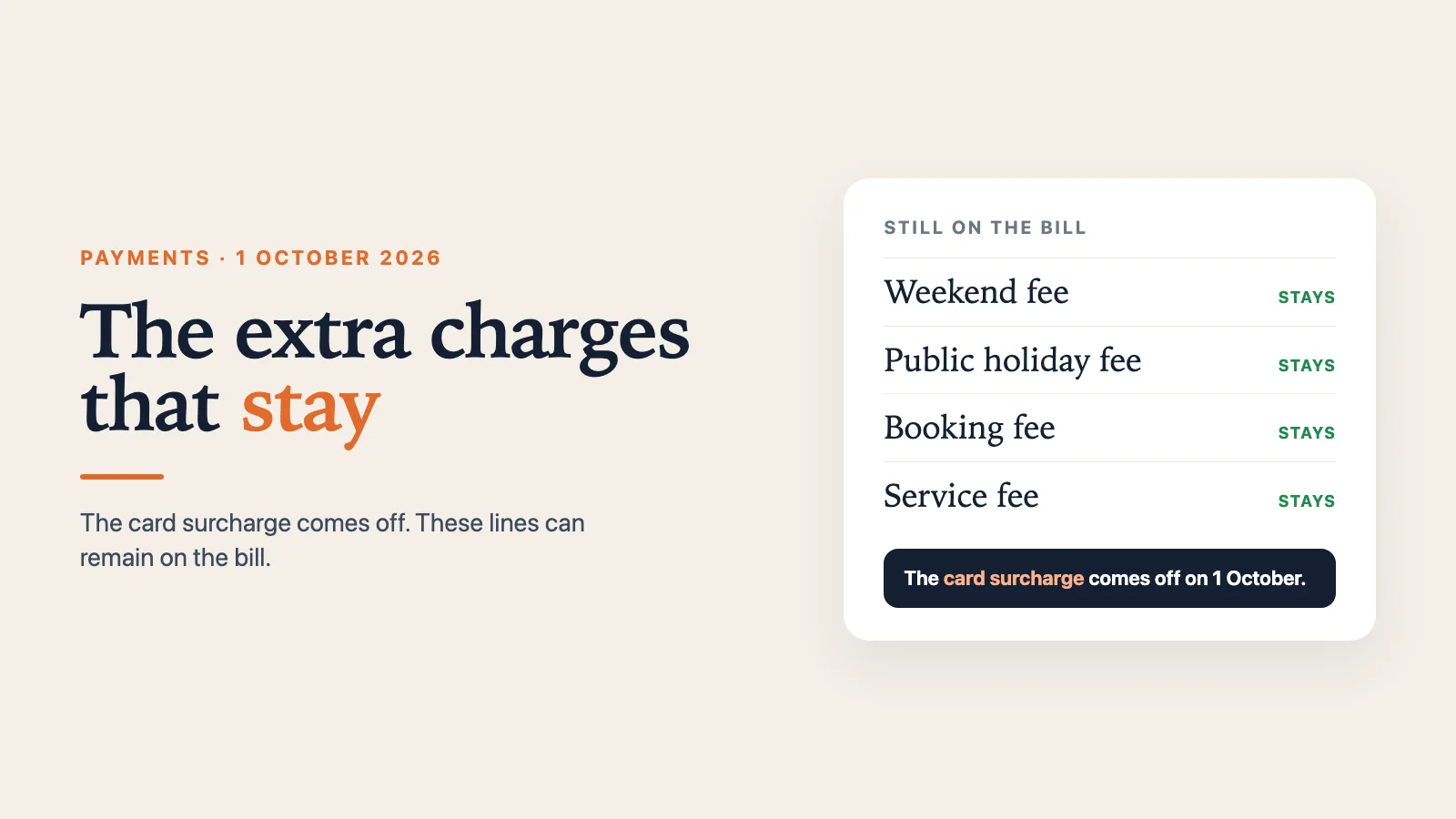
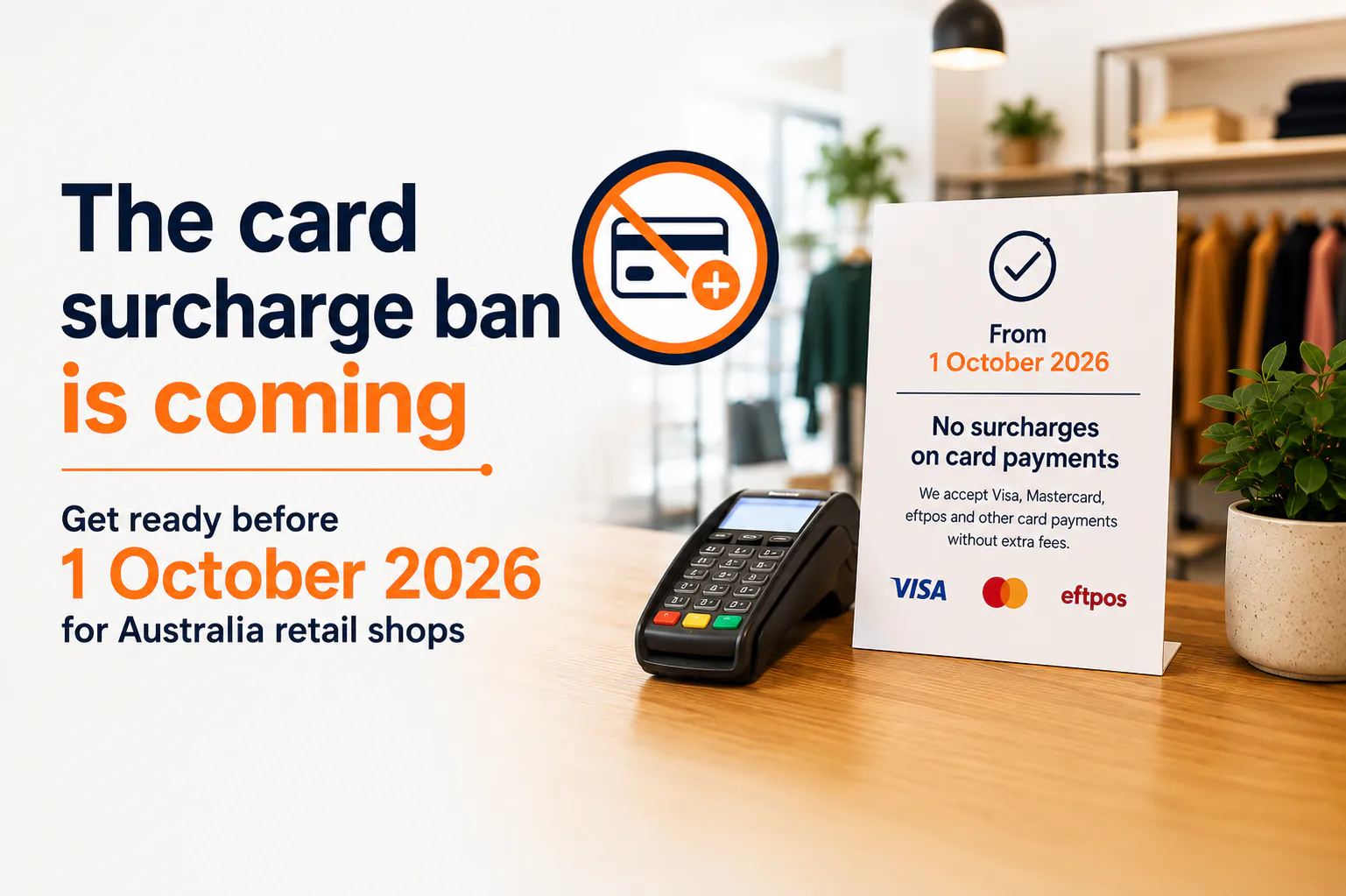
This collides with a big rule change. From 1 October 2026, the RBA is banning card surcharges on eftpos, Mastercard and Visa, and cutting interchange fees. That makes your POS setup more important, not less. You'll need one that switches surcharging off cleanly, shows all-in pricing everywhere, and still reports your true cost of acceptance so you can price accurately.
What to do: Confirm your POS can handle the surcharge change before the deadline, and that it supports the payment types your customers actually reach for.
4. Online and in-store finally become one system
The line between your shop and your website has all but vanished. Customers browse online, buy in store, order for delivery — and expect it to feel like one business. That only works if your systems talk to each other.
Omnichannel POS platforms now sync straight to eCommerce stores like Shopify, keeping stock accurate and reporting in one place. In Australia, 68% of venues offer some online ordering and 52% have delivery built into their POS — and those numbers keep climbing.
What to do: Don't run your online and in-person sales as two disconnected systems. Look for native integrations that keep inventory and reporting together.
5. Self-service spreads past fast food
Self-service kiosks started in the big chains. In 2026 they've reached mid-sized restaurants, boutique shops and grocers. It's part labour cost, part customer preference — plenty of people would rather order at their own pace and skip the queue.
Done well, self-service doesn't replace your team. It frees them to focus on hospitality while the kiosk handles routine orders. The catch is integration: the kiosk has to feed the same system as your counter, kitchen and online channels.
What to do: If queues or staffing are a pain point, trial one self-service option and measure the effect before going all-in.
The thread running through all five: consolidation
Notice the pattern? The best POS in 2026 isn't the one with the most features. It's the one that pulls payments, stock, staff, online orders and reporting into a single connected system — reachable from anywhere, and smart enough to surface what matters.
That's exactly the problem Weeklify is built to solve. For Australian businesses facing a year of rule changes and tight margins, that kind of consolidation isn't just convenient — it's how you stay accurate, react fast, and spend less time wrestling your tools.
Statistics cited reflect industry reporting current to 2026 and are general information only.
Sources: LithosPOS — POS System Trends 2026; TapTouch — Australian Restaurant Business Statistics 2026; RBA — Review of Merchant Card Payment Costs and Surcharging
The Weeklify team writes about payments, POS and the day-to-day of running a service business in Australia.
Run a calmer, fuller salon.
Everything you just read is built into Weeklify. Start your three months free — no credit card.