
There's a setting on most card machines that can quietly shave nearly 20% off what you pay to accept debit cards. Most owners have never heard of it. You're about to.
In the next five minutes you'll know what least-cost routing is, whether yours is switched on, and the one question that gets you a straight answer from your provider.
What is least-cost routing?
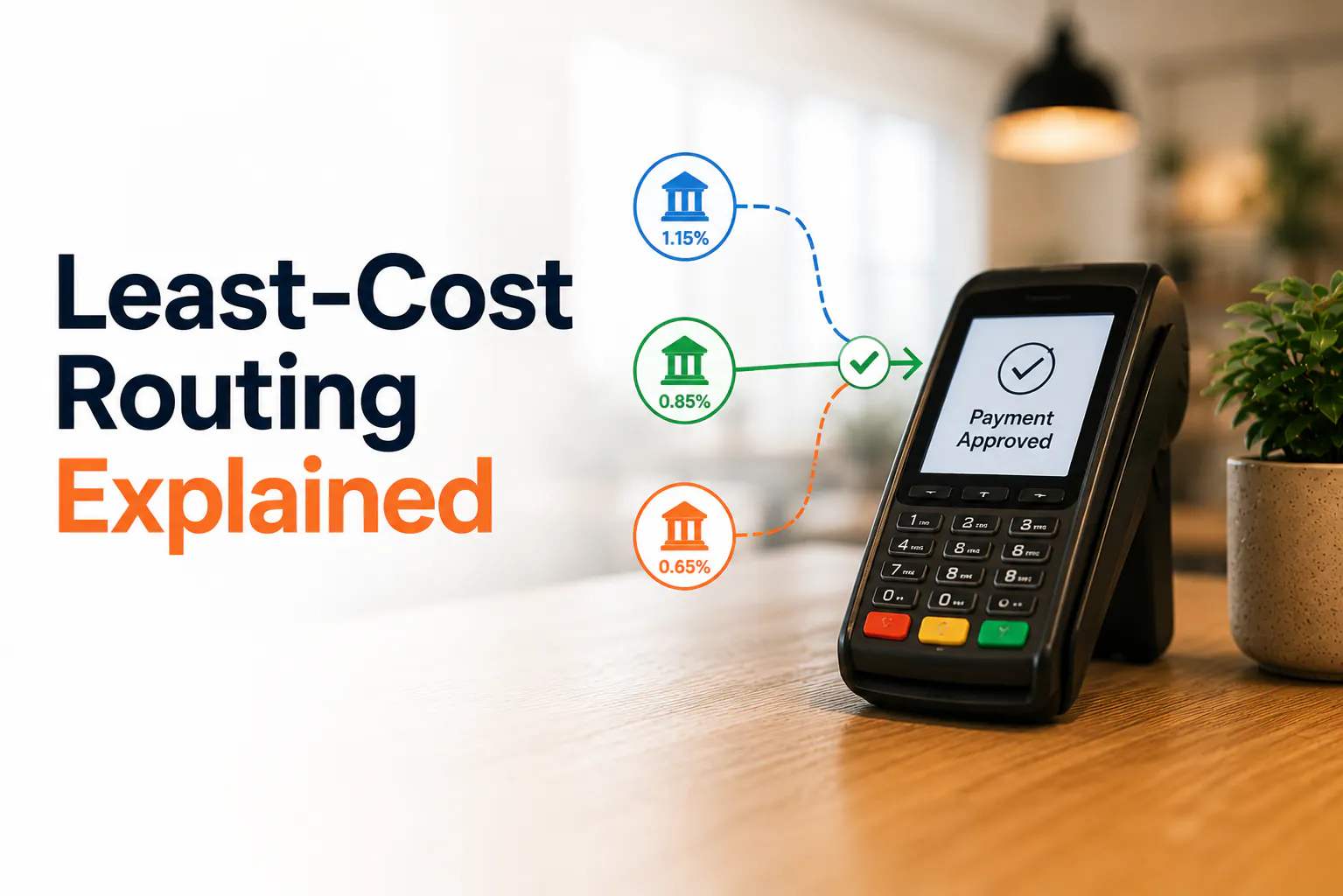
When a customer taps a debit card, that payment can travel down more than one road. Most Aussie debit cards carry two networks — eftpos, and either Visa or Mastercard. Same card, two ways to process the tap.
Here's the catch. If nobody's told the machine otherwise, it usually sends the tap via Visa or Mastercard by default. That's often the dearer road.
Least-cost routing (LCR) flips that logic. It tells your terminal to send each tap-and-go debit transaction down the cheapest available network — usually eftpos. Same tap, same card, smaller fee.
You don't change anything for the customer. The card still works, the receipt still prints. The only thing that changes is the wholesale cost behind the scenes.
Why this exists in the first place
LCR didn't appear by accident. The Reserve Bank of Australia (RBA) has been pushing for it for years, because it wants merchants to get a fairer deal on payment costs.
In 2021 the RBA went further. It set an explicit expectation that payment providers offer and actively promote LCR — for in-person payments and online ones too. Not "if you ask nicely". An expectation.
So this is a recognised, regulator-backed thing. It's not a loophole or a hack. It's how the system was meant to work.
How much can it actually save you?
This is where it gets real. Independent payments analysts CMSPI estimate that debit acceptance can be nearly 20% cheaper with LCR turned on versus off.
Zoom out, and the numbers get eye-watering. CMSPI reckons full availability of LCR could save Australian businesses around $800 million a year, all up.
For one café running mostly tap-and-go debit, even a fraction of that 20% adds up over a year of flat whites. It's the kind of saving that doesn't change a single thing about how you serve customers.
Is your LCR even switched on?
Good question — and the honest answer is, plenty of merchants don't know.
By 2023, around 99% of merchants could use LCR on card-present (in-person) transactions. Could. That's not the same as having it switched on, or routing well once it is. Online lagged behind too, so e-commerce debit often still defaults to the pricier road.
So "available" and "active" are two different things. The only way to be sure is to check.
What to ask your provider
You don't need to learn the jargon. You just need to ask the right things and listen for a clear answer. Copy this into an email or read it down the phone:
- Is least-cost routing turned on for my account, right now? (Yes or no.)
- Is it on for in-person and online debit transactions?
- Will it route each tap via the genuinely cheapest network — or just sometimes?
- Does turning it on cost me anything, or change anything for my customers? (It shouldn't change the customer experience.)
- Can you confirm in writing, and show me the impact on my next statement?
If the answers are vague, that's your sign to push harder — or shop around. The RBA expects your provider to offer this. You're allowed to expect it too.
Your quick LCR checklist
Run through this today:
- Pull out your last merchant statement and find your debit fees.
- Email or ring your provider with the five questions above.
- Confirm LCR is active for in-person debit.
- Confirm it's active for online debit, if you sell online.
- Get the confirmation in writing.
- Recheck next month's statement to see the difference.
Where Weeklify fits
A modern cloud POS like Weeklify works with payment setups that support least-cost routing, so your debit taps can take the cheaper road without you fiddling with the terminal between customers. It's one less thing to babysit on a busy Saturday.
Want a hand reading your merchant statement? Have a chat with your provider first, then talk to us about getting your point of sale and payments working together.
Sources: Reserve Bank of Australia — Least-cost Routing; CMSPI — Cutting Costs, Not Corners: The 2024 Guide to Least-Cost Routing for Aussies
General information only — not financial advice. Your fees, eligibility and routing options depend on your provider and setup. Check your own statements and confirm details with your payment provider before making decisions.
The Weeklify team writes about payments, POS and the day-to-day of running a service business in Australia.
Run a calmer, fuller salon.
Everything you just read is built into Weeklify. Start your three months free — no credit card.